Programmatic media buys – As media planners, we think it’s important to analyze every part of our media plans – how each medium is performing and why we think it’s performing/not performing. Recently, we asked ourselves what we think the pros and cons of programmatic media buying are for our different clients and now we want to share our thoughts with you. Here are the pros and cons:
The Pros
1. Targeting
With programmatic media buying, it’s easier than ever to reach your target consumer. For example, if one of our clients is a yacht manufacturer, you can identify people who are searching for yachts for sale, and then serve ads to them on the sites they frequent.
2. Creative Control
With programmatic media buys, you’re able to gain insights about your audience and change out your creative within moments if the results make sense to do so.
3. Lower CPM
The CPM (cost per thousand) on programmatic media buys is often much less expensive than with direct publisher buys.
The Cons
1. Transparency
With programmatic media buys, you won’t necessarily know the exact website and section of that website your ads appear on.
2. Ad Fraud
There is a high percentage of bot ad fraud that can occur with programmatic media buys (as is the case with any digital media advertising).
Conclusion
In general, we feel that programmatic media buying is a valuable component to our media plan as we think it’s important to have a media plan be as well-rounded as possible. We cast a wide net when we begin a campaign and gradually narrow that net as we identify the audience we’re actually reaching. Let us help you with your next plan.
Digital Ad Fraud has been such a hot topic in the digital advertising space for a while now, it’s important for advertisers to understand the two main types – Bot Fraud and Site Fraud – the basics of how they occur and why.
Bot Fraud
Bot Fraud is possibly the more widely discussed of the two, and conceptually very easy to understand. There are “bots” (a.k.a. nht – non-human traffic) created to crawl the internet and mimic the activity of human internet users. The bots are served ad impressions and then click on ads, thereby wasting advertising dollars for apparently malicious intent. Most people understand this concept but do not understand the point – why are these bots created and how do they, or the people that create them, benefit from committing ad fraud.
Essentially, the bots are created by programmers that are trying to make money. The bots are programmed to attach themselves to the browsers of actual human internet users in order to mimic the behaviors of those human internet users (example, 30-year-old women, shopping for shoes). The person that created the bot(s) will then create a fake website that boasts an audience of 30-year old women who are shopping for shoes. The programmer will then register that fake website with DSPs (demand-side platforms such as Rocketfuel, to name one) and then collect their money from the DSPs. DSPs will then serve impressions to this fake website when/if any of their advertisers are looking to target 30-year-old women shopping for shoes. The impressions and clicks that are then received from that fake site are fraudulent because none of them are from actual, human traffic.
There are ways to detect bot fraud – the best of which is to obtain the use of a reputable fraud detection service (such as Integral Ad Science or Forensiq, to name a couple). In the instance that this is not in your budget, at the very least you should be monitoring your Google Analytics. Big things to check for are big spikes in traffic during short bursts of time and very high bounce rates.
Site Fraud
Site Fraud, as appropriately named, occurs on the side of the publisher (website). Two big types of site fraud are ad stacking and pixel stacking. Ad Stacking occurs when, for example, the publisher has one spot on a page for a 300×250 display ad, but puts five advertisers in that spot at one time. All five advertisers are charged an impression, but really only the top advertiser’s ad was actually seen. This happens less and less now with the charge led for greater viewability. Pixel stacking is when the publisher places a 1×1 pixel on their site as a stand-in for your ad. Your ad is charged an impression but no one actually sees it.
Digital ad fraud is something all advertisers should be educating themselves about and taking steps to prevent. If you’re looking for advice on how to proceed with ad fraud detection and prevention in your digital advertising, let us help you!
With the holidays fast approaching, we thought, what better way to get into the spirit than to rank our all-time favorite holiday ad campaigns? Utilizing holiday ads is a great way for your company to get creative, engage your customers, and remain a fierce contender among your competitors during the holiday shopping season. We took a look at holiday ad campaigns, both classic and new, and noted the reasons behind their memorability.
Here are our top 10 favorites that we felt spread the most holiday cheer:
The soda company has been doing holiday ads right since 1931, when they first featured a jolly Santa drinking a Coca-Cola. Our all-time favorite Coca-Cola ad campaign is the classic, fun-loving polar bears that always combine a mix of snow adventures with some holiday sparkle. The penguins sometimes featured in these ads have made the cuteness level insurmountable through the years.
The fun candy brand brings us back to when believing in Santa was the best part about the magic of Christmas. In this classic commercial, the M&M’s and Santa are shocked to discover that one another exist. Good luck trying to refrain from smiling while watching this one.
Short, sweet, and to the point, this classic always does a great job of ringing in the holiday season (literally). With the Hershey’s Kisses being used as bells to provide you with a Christmas carol, you will certainly feel more festive after watching this one.
Developed a few years ago by this department store giant, this campaign is for a great cause. For every letter a child writes to Santa and delivers to a Macy’s “Letters to Santa” mailbox, $1 will be donated to the Make-a-Wish-Foundation. Looks like Santa will have a lot of reading to do this holiday season.
Apple won an Emmy for this heartfelt commercial that first aired last year. It shows a young boy looking completely preoccupied with his iPhone, rather than enjoying holiday time with his family. However, we learn that he was capturing memories for his family to enjoy later in a video compilation. Maybe have some tissues on hand before watching this one, it’s a bit of a tearjerker.
“Let it Snow” is playing in the background of this classic holiday commercial which perfectly portrays the warmth of home on a cold winter night. In the ad, a snowman comes in from the cold and sits down to a nice hot bowl of Campbell’s soup. The soup warms him up until the snowman melts away and a young happy boy is revealed. Sorry Frosty.
The combination of snow, sleigh bells, and the beautiful Clydesdales in this holiday ad campaign makes it such a classic. A Christmas tree is placed into a sleigh being pulled by the Clydesdales in what looks like a majestic winter wonderland.
Target has always been creative with their holiday ad campaigns. This season, they did it again with this fun and adorable Alice-and-Wonderland-like commercial. It features a little girl in “Marshmallow Land,” where all of her toys come to life.
This cute new commercial tells the story of a young boy and his penguin, Monty. Monty longs for companionship, so the boy finds a way to help make him feel better just in time for the holidays. It’s heartfelt and thoughtful, with a cover of John Lennon’s “Real Love” playing as the perfect soundtrack.
Each of these ad campaigns is memorable in some way, creating a lasting impact on consumers. Happy holidays!
With Thanksgiving next week, we decided to make a video to express all the things we’re thankful for. From our clients to our vendors, as well as all the little things like our pets, pizza, and the cool new chalkboard wall in our studio lobby, we have so much to be thankful for!
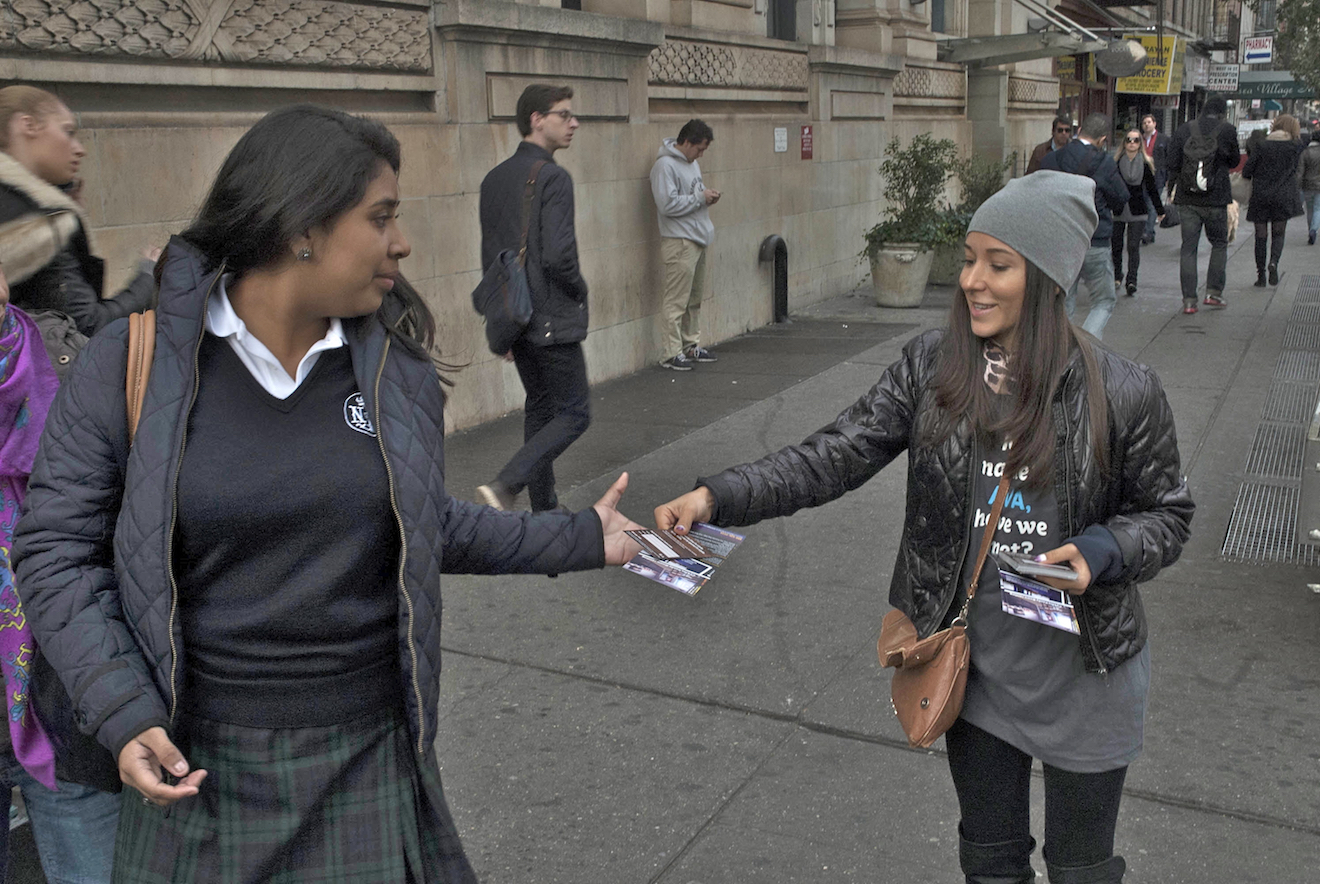
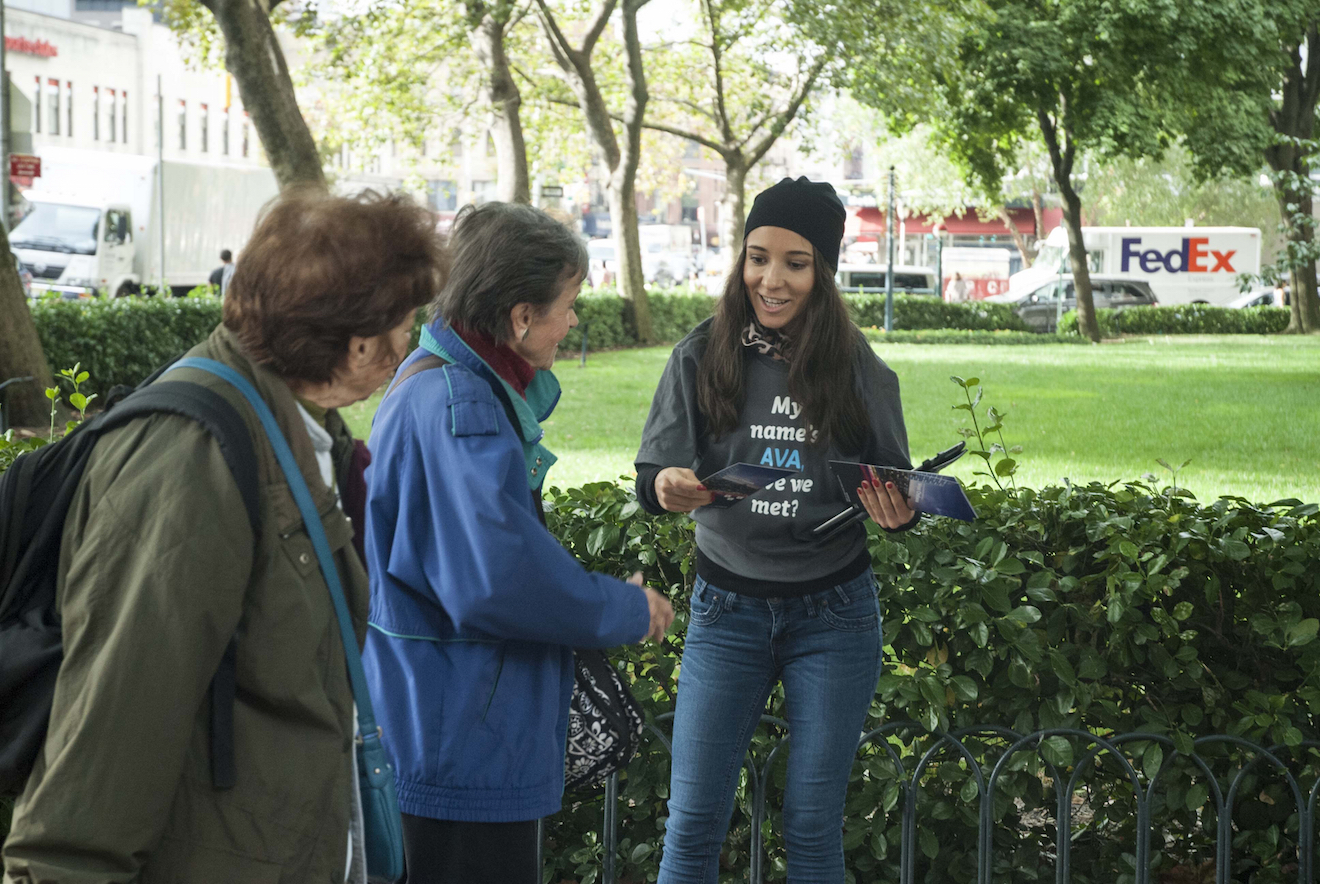
A street team is a great marketing tool that can provide your company with more brand recognition and can help you gain potential clients. However, if the team is not assembled properly, may not have the effect that is intended, and in some instances, may have the adverse effect. The challenging part is relying on your street team to be the face of the company during these important customer-facing events. Here are some key tips to ensure you created a solid, successful street team who will get the job done right:
1. Hire good people
In a nutshell, a street team member should be outgoing, professional, and dependable. You want to hire someone who will talk to each and every customer and potential customer, and really knows how to keep that conversation flowing to build a connection.
Your street team’s job is to always be on their “A game.” You never know who might show up to certain events or whom you may meet while on the job. Professionalism is key here in order to make a strong impression while interacting with customers.
2. Divide and conquer
Make sure the team members have an equal and fair workload. Divide the work duties and let each member know what they should be doing during specific times.
3. Location and frequency matter
The target location, or the type of event you’re attending, should always make sense for the demographic you are targeting. There should also be a high number of customers or potential customers at that event to make it all worthwhile.
It’s also doubtful that your company will be remembered after a one-time appearance. The frequency that you deploy your street team should also be a major consideration. For best results, space your street team out on a weekly or bi-weekly basis (budget permitting) so it has a lasting impression of you customers.
4. Dress to impress
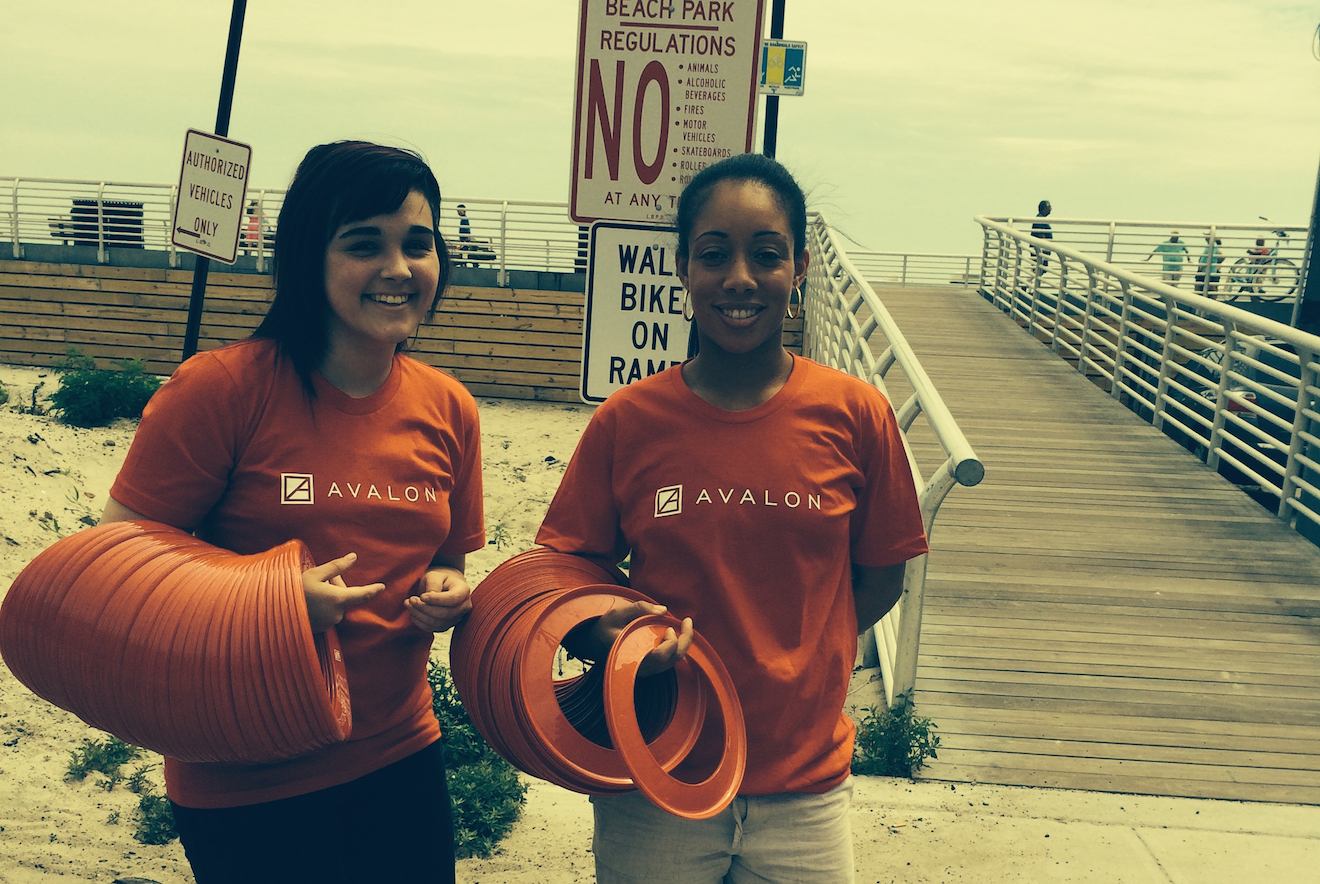
Provide the street team members with branded apparel including t-shirts, bags, and any other branded items that would be appropriate for that specific event. Your street team should also have informative collateral about your product or service on hand that includes a call to action, preferably a unique website, where you can track the success of the outreach campaign.
Personal interaction with customers is one of the best ways to get your brand’s message across. If a street team is done well, you should see sales increase almost instantly. However, if done poorly, it could have devastating effects and turn customers off for life. For best results, hire a company with experience that can guide you through the process.
Here at Primary Design, Inc. we take our candy pretty seriously. We even have an office candy jar which must be stocked at all times. But if you want candy around here you need to act fast, because just as soon as it’s filled, the jar is empty again! With Halloween upon us, we wanted to impart some of our candy-loving knowledge based on the two factors that are most important to us – packaging design and, of course, flavor. Here is a rundown of our favorites and least favorites:
Our Favorites
Hershey’s Bars
The large H-E-R-S-H-E-Y’S letters are easily some of the most recognizable in the candy aisle. Throughout the years there have been countless refreshes, but the basic essence of the Hershey’s brand has remained. The Classic Hershey’s Milk Chocolate and The Milk Chocolate with Almonds epitomize this with their tall, stately sliver lettering and floods of rich, chocolate brown. Not only is the outside packaging branded with the Hershey’s logo but every rectangular break-away-able chocolaty morsel on the inside is too. We can’t help but smile when thinking about this delightful chocolaty goodness.
Reese’s Peanut Butter Cups
The perfect combination of chocolate and peanut butter; you really can’t get any better. The packaging is so bold that it has great visibility and recognition even from a distance. The bright orange, yellow and dark brown colors seem to scream Halloween! While the cursive font of the Reese’s implies a smooth buttery taste. Overall this is truly a classic Halloween treat.
Candy Necklaces
These gems take “Form meets function” to another level. What? I can eat this candy AND wear it?! Two please, for a matching necklace and bracelet ensemble.
Swedish Fish
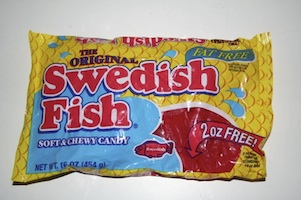
A gummy that looks like a fish and tastes like a strawberry! The bright yellow and cyan wrapper with the bold red name/logo on the front elicits a youthful and playful feel. And who doesn’t like to pretend that they’re a big fish in a small pond!
Toblerone
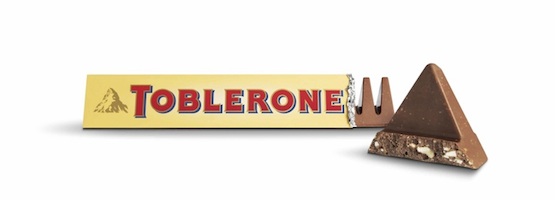
Triangular packaging reflects the mountainous Swiss origins of this unique bar. The distinct packaging makes this scrumptious milk chocolate-honey-almond-nougat bar stand out among a sea of brown rectangles. The one-of-a-kind shape, along with the inside foil wrap, lets you know each Toblerone is indeed a treat for the upscale chocolate lover. If you’re lucky enough to snag one of these at Halloween, run home, change your mask, and go back for more!
Our Least Favorites
Warheads
There is a reason why this candy comes individually packaged as the package clearly depicts what will happen if you eat it. With its cartoony character and “EXTREME” warnings this packaging is clearly aimed for kids who dare each other to eat it. However, for adults it serves as a warning to STAY AWAY! Somehow Warheads made it into our office candy jar, but to no-one’s surprise they usually remain untouched at the bottom of the candy jar while we’re waiting for another fill-up.
Charleston Chew
Clunky type, unattractive color combinations. But the taste will make up for it, right? Yeah, right. Enough said.
SkyBar
Maybe the poor packaging begins with the poorly named product. Four milk chocolate “compartments” containing vanilla, caramel, peanut and fudge. Why SkyBar?! To be fair, the candy was introduced using a dramatic skywriting campaign, but is the campaign really the reason behind the name? And if you call your candy “SkyBar”, why not consider sky blue in the packaging, instead of bright yellow? The latest version of the packaging does introduce blue stripes in a limited fashion, along with typography that tries to be hip, but isn’t quite there.
100 Grand
This candy bar was originally known as the $100,000 Bar. As a part of its identity during the 1970’s, the packaging featured the high dollar amount in big, juicy characters akin to what you may see on a 70’s game show. To complete the game homage, the $100,000 name was wrapped in a string of “marquee” lights. Somewhere along the way, someone got the brilliant idea to change the name from $100,000 to 100 GRAND. The marquee lights were removed as was the delightfully cheesy perception that somehow a 10 yr. old was paying $100,000 for a candy bar. Maybe a confection of higher quality could have weathered the storm better, but the 100 GRAND Bar, with its watered down identity and average taste, is relegated to a secondary position among candy bars.
Our list may or may not agree with your tastes, but hopefully we gave you some things to think about when you’re walking down the candy aisle this Halloween. Let us know what your favorites are! We’re always looking for new candy to stock our jar with!
In our last post we spoke about Serif fonts, their different categories, and how their physical qualities can have a dramatic effect on how a design, and thereby a brand is perceived. In this post we will do the same for Sans-Serif fonts and will also discuss Display fonts.
“Simplicity is the Ultimate Sophistication” ― Leonardo da Vinci
Sans-Serif fonts (“sans” meaning without) do not have serifs. They usually feel cleaner and simpler than Serif fonts and sometimes, but not always, more contemporary. They can appear minimal and modern. But they can also be perceived as too simple, casual, unfriendly or cold.
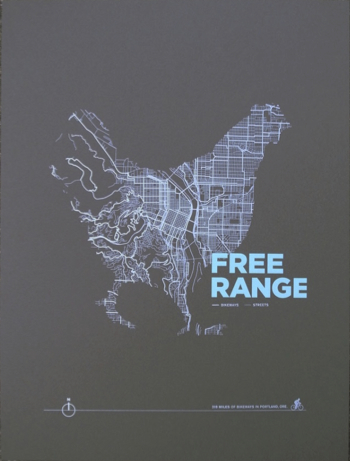
Example: For this cycling inspired poster art the designer used a Sans-Serif font that is both bold and strong but also simple with clean straight edges that complement and do not distract from the texture created by the map.
These can also be subcategorized into different groups. Humanist Sans-Serif, similar to Old Style Serif fonts, is more closely related to calligraphy and forms created by gestures of the hand. Compared to other Sans-Serif groups, there is more variation between thick and thin lines. This quality allows them to be clean and simple but less cold and machine-like. Frutiger is a Humanist Sans-Serif. Transitional Sans-Serif fonts are more uniform, like Helvetica. These tend to be very adaptable with an easy readability, and look good in many different situations¬, especially signage, but can sometimes lack personality and feel kind of bland. Geometric Sans-Serifs like Futura are very uniform and tend to follow geometric shapes rather closely. They can feel very clean and contemporary but their sharp edges and perfect shapes can feel harsh and cold.
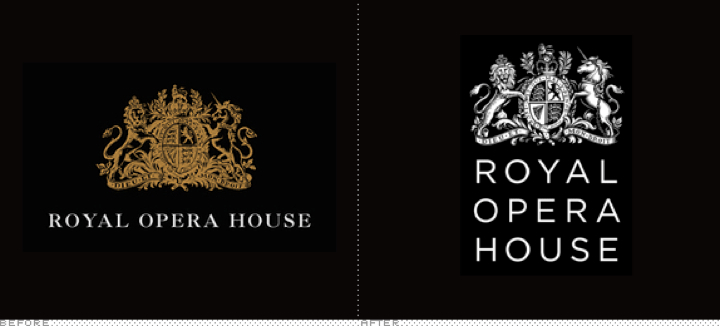
Example: Royal Opera House
Above is a great example of how to successfully evolve a brand. The Royal Opera House recently updated their logo. There is obviously a lot of history there that they want to still reflect in their brand. By choosing an elegant Sans-Serif font–a light-weight version of Gotham–they complemented the traditional looking crest while giving it a more contemporary look that better reflects their performances and patrons.
By increasing the size of the type in relation to the crest they were able to make the name more prominent but keep that elegant feeling, marrying the old and new successfully. The crest speaks to its long history while the type, more sophisticated and graceful like a dancer, speaks to a new blossoming future.
All the World’s a Stage
Most of the fonts discussed above would feel right at home as body copy, in large blocks of text. There is another category that is hard to specifically define except in saying that these fonts are often created for use as Display fonts. In other words, they are usually intended to be headlines or used in other short form type uses.
They can be Serif or Sans-Serif. They can be hand drawn, script, grungy, distorted, dirty or incredibly ornate. They usually do not do well in body copy as they tend to be hard to read in larger chunks. But they can really pack a punch. Are you working on a flyer for a Halloween sale? How about using Horror Flick. Hosting a black tie event? Set your headline in Bellisima Script. I know these examples are extremely cliché, but you get our drift.
These fonts tend to be very expressive, hitting you over the head with the intended message. They can be very useful to communicate an idea quickly and efficiently. They can make your design fun and engaging.
The potential downside, besides the risk of being too cliché, is they can also have a short shelf life. They can feel dated very quickly. Or they can feel shallow, only embodying one idea. A one-trick pony. In other words even if you are selling Halloween costumes you might want to think twice about using Horror Flick in your logo. Then again, maybe it’s just right.
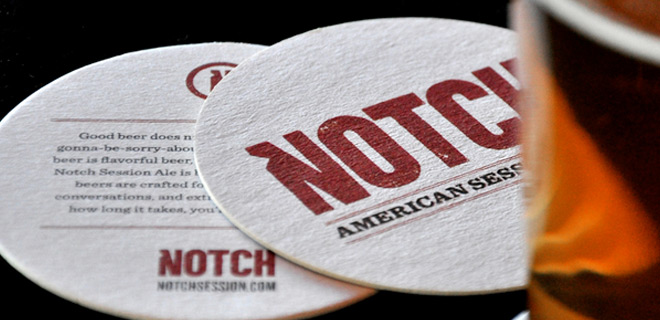
Examples: Notch Beer – fun, rugged and outdoorsy.
Rules are Meant to Be Broken
Now that we’ve laid out the general principles you’ll notice we used a lot of words like “often” or “usually” when describing categories of type. There are always those typefaces that break with expectation and the general descriptions we’ve laid out above. Serif fonts don’t always feel traditional. Sans-Serif fonts are not always sleek and contemporary.
All this of course, like all design, is a subjective art. You cannot guarantee that people will interpret these typefaces along these lines specifically or in the exact same way that you do, but there is a visual language that is at work, and understanding that language is what allows us to communicate ideas through our designs. Type is a major part of that language.
Now we’ve just scratched the surface of the big bad world of type. If you are like us and all this just makes you want to geek out on type, below is a list of resources that covers all different aspects of typography.
Fun Stuff
Veer has a great tool to find a font in their collection. It groups fonts in categories like fancy, traditional, futuristic or retro and allows you to see your message typeset in a particular font.
Fonts are like people. They can be funny or serious, simple or complicated, sophisticated or playful, even naughty or nice. Some gorgeous ampersand can just walk into a room and everyone stares. They have personalities. They can be odd and goofy like your weird uncle or demand respect through experience and wisdom.
Type is a major part of how a design is seen and understood. It embodies the message we are trying to communicate. It is a critical part of whether or not a design is successful.
Choosing the right typeface for a project can be a very daunting task. There are a multitude of choices available literally right at our fingertips (see Veer or Fonts.com for examples of two popular purveyors).
As designers, we could spend endless amounts of time searching the vast array of font websites or our in-house font library looking for a typeface that is just right for our client’s website, brochure or logo. Understanding a little about how type works can really help us select the best typeface in a more efficient way.
There are books upon books that cover the history and anatomy of type. We will touch on these subjects in the following paragraphs, but really we will be presenting an overview of the basics of type and how the history and aesthetics of a typeface can influence how a typeface and, ultimately, a design is perceived.
There are a number of different categories of typefaces but we’ll first focus on the two categories most fonts fall within: Serif (as shown below) or Sans-Serif (as shown in our next post).
Tails Never Fail
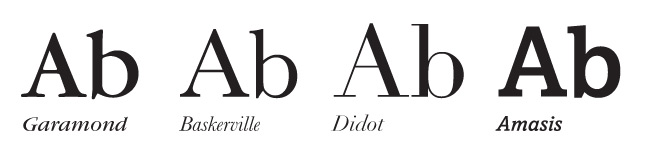
Serif fonts are defined by the little “tails” (serifs) that are usually at the ends of a stem on a letterform. Fonts like Times or Garamond are commonly used fonts in this category. Serif typefaces tend to feel more traditional, responsible, mature or official. They often denote experience, historical significance or upper-class status but can, in some situations, feel out of date, stodgy, too serious or pompous.
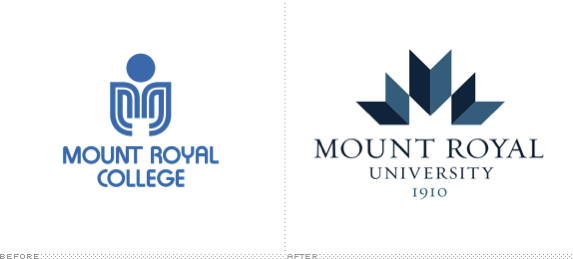
Example: Mount Royal University, Calgary, in redesigning their logo went from a Sans-Serif font that felt very dated and casual to a very handsome Serif font that feels much more official and adds to their credibility.
You can additionally group serif faces into subcategories. Old Style fonts like Garamond feel the most traditional because, well, they are usually the oldest. Many of the typefaces we use today are revived or reinterpreted versions of typefaces dating back to the 15th and 16th centuries. They more closely mimic calligraphy and the gestures of the hand when writing.
Transitional typefaces came along later when the printing technology allowed designers to create type that had more variance between thick and thin parts of the letters. This created more contrast in the letterform and hence the ability to make type more dramatic. Letters became less organic and less related to calligraphy and more geometric and abstract. Baskerville is the standard example of a Transitional Serif typeface.
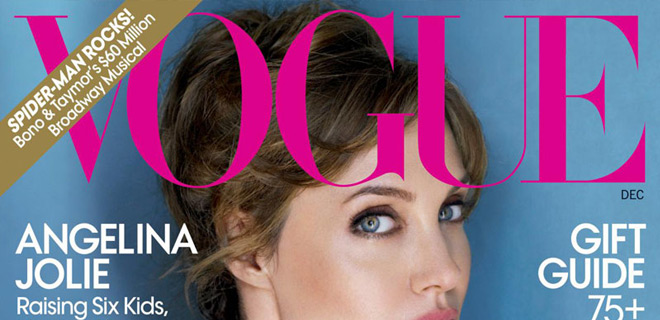
Two other subcategories worth mentioning are Modern Serif and Slab Serif typefaces. Modern Serif faces took the movement towards more abstract type forms to an extreme with thin and straight serifs and very sharp contrast from thick to thin. Think Bodoni or Didot. When we think of these typefaces, we usually think of high fashion, or a glamorous Parisian night.
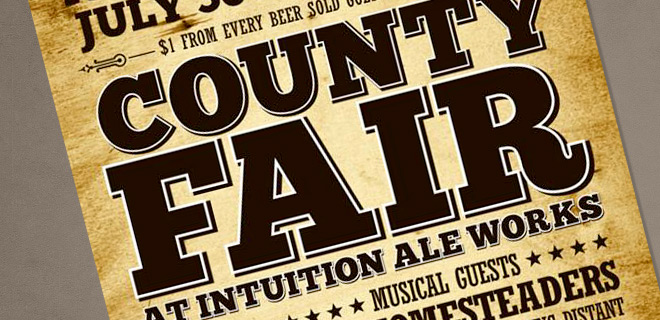
Vogue uses a variation of Didot in its logo. Slab serifs are identified by their thicker blocky serifs. They tend to feel assertive, bold and masculine. Like a poster from the Old West.
Example: Vogue cover using a Modern typefaceExample: This big and bold Slab-Serif font makes a statement on this County Fair poster
As a design firm, we’re always looking for ways to take the filters off and allow ourselves to be inspired so that we can continue to create great design. Below are some sites we enjoy:
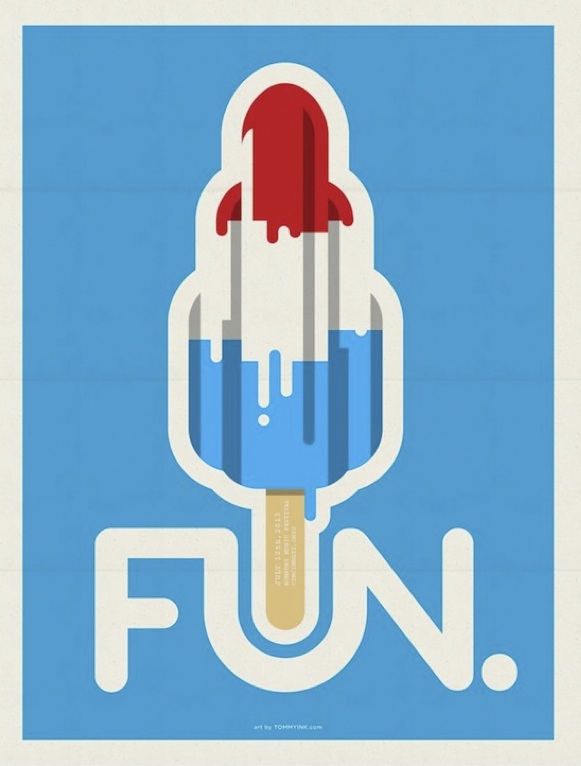
Communication Arts and Print are classic resources that cover graphic design, advertising, branding and identity development, web and digital design, environmental design, packaging, photography and illustration. These sites showcase some of the best and brightest work today. On both, we find inspiration in the limitless exploration of design elements such as composition, color, texture and typography. This specific collection of gig posters from Print is interesting for both the aesthetics as well as the subject matter.
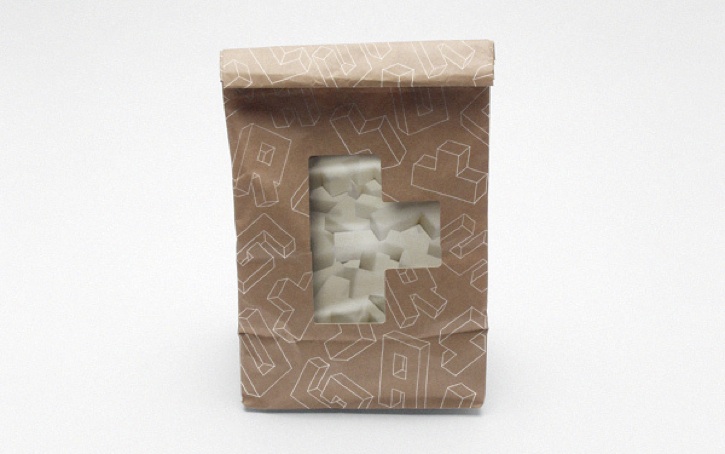
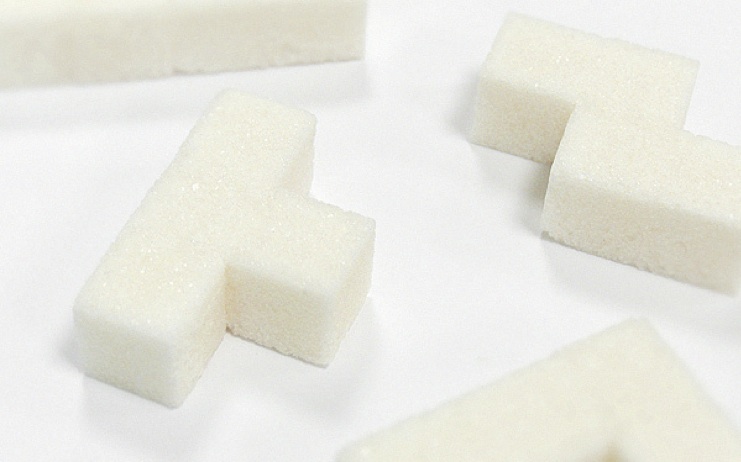
I.D. – is a place to see all types of innovative design running the gamut from brand development to environmental experiences to textile design to household items. Specifically, this visual of the Tetris Sugar Cubes is interesting as the product itself is designed as well as the packaging. And who doesn’t love Tetris?
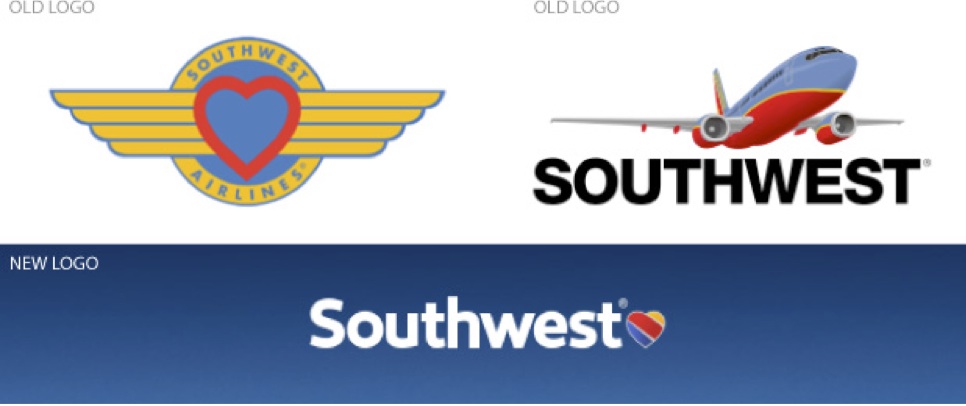
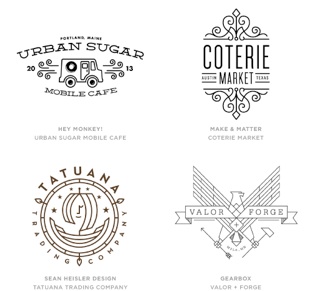
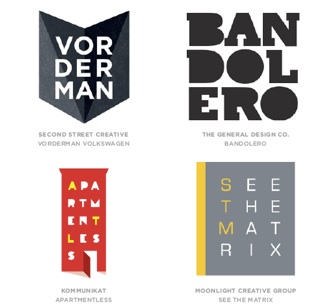
Logo Lounge – looks at a lot of logo befores and afters, and also features sections on trends. It’s fascinating to be able to compare where a business or organization’s identity started from with where it’s ended up.
And even though you wouldn’t design a logo with a specific trend in mind, it is intriguing to see a grouping of four logos together that seem to have followed the same trend – although presumably without knowing it. See two 2014 trends below for examples pulled from the site.
As a design firm, we believe it’s important to continually approach our projects in a fresh, energized way. We always want to be able to deliver innovative design that serves our clients’ particular needs in the most unique ways possible.
At Primary Design, we design and implement a lot of interactive display campaigns for our clients – Google Network, programmatic packages, individual websites, smartphone/tablet campaigns, to name a few.
Call to Action buttons are an important aspect of interactive display design, just as they’re an important aspect of any form of advertising design. They’re meant to catch the user’s eye and direct them to take the next step, which in this case is visiting the client’s website.
Below is a very general, extremely simple list of do’s and don’ts for designing/implementing call to action buttons on your interactive display ads.
Do
1. Include Call to Action Buttons on Your Interactive Display Ads
Possibly overly obvious do, especially considering the title of this blog post, but it is worth repeating. Call to Actions are an important part of any marketing campaign. Adding them to your interactive display ads is just as important as adding them to any other part of your campaign.
2. Avoid Excessive Punctuation
There are a lot of reasons to do this, but mainly, excessive punctuation (example: multiple exclamation points in a row) makes an ad look silly and spam-like. Trust your design and message to do the job. Trust the user to appreciate the quality of your ad.
3. Design the Call to Action with Your Brand in Mind
Consider the colors and fonts of your brand guidelines when designing the Call to Action button. You want the Call to Action to be eye-catching, but it’s important that it’s on brand and stylistically consistent with the webpage the user is about to be taken to.
Don’t
1. Use Generic Calls to Action like “Click Here”
Again, as with our first do, this might seem overly obvious, but can’t be emphasized enough. It’s the internet. No one needs to be told to click on anything. You want your potential clients to click with a purpose.
As this BootSuite.com guest article explains (although in reference to Google AdWords, the concept applies) “A proper call to action sets the user’s expectation of what their next step will be…”. A better call-to-action would be “Apply Today” or “Learn More”, as you’re giving a hint as to what the user will do once they click (example below).
2. Neglect to State the Point You’d Like to Measure
As with don’t #1, where you want to give the user an expectation of what will happen next, the most effective Call to Actions will state the measurable action you’d like the user to take.
For example if you’re using a conversion pixel in your display campaign and the conversion you want to measure is how many people fill out a form requesting more info, a call to action button stating “Contact Us” makes sense. The ad should then direct right to the page/form where the user can fill out a request for more info.
3. Make the Call to Action the Biggest Part of the Ad.
It doesn’t need to look bad to be eye-catching. This is an ad you’re designing and should follow your brand and communicate the message of your product. Display ads should be eye-catching in a good way and inspire trust in your user, especially when a decent portion of online ads can lead to viruses or spam websites.
We love designing and implementing interactive display campaigns at Primary. You should Contact Us! to do yours.