
What is Eco-Friendly Marketing, and Why Should My Company Care?

“Eco-friendly” or “green marketing” has been around since the late 1980s and has really come into prominence in the last 10 or so years. We have noticed a significant increase in the requests from our clients for the use of eco-friendly materials – from reclaimed wood displays and banners made out of recycled material to custom printed seeded paper and recycled or reusable promotional items.

Eco-friendly marketing focuses on using earth-friendly practices and materials when producing, promoting and packaging goods and services. It encourages companies to use eco-friendly business practices and establish relationships with vendors who are environmentally responsible and use earth-friendly products.

Consumers now understand the harm that unsustainable products and practices cause to the planet, and companies are responding by promoting their products or services with the smallest environmental footprints possible. Because let’s face it, marketing can be a dirty job.

How can your company use eco-friendly marketing? There are several ways your company can use eco-friendly marketing. To get started on the transition to going green, we suggest following these three steps:

1. Reflect on How Your Company Operates Day to Day

Consumers are not solely focused on the product or service anymore but instead on the company that produces the product or service.  Does your company use green efforts in its daily business practices? Take IKEA and its green foresting techniques for example.

If your company isn’t practicing green production techniques, it could affect how your product or service is portrayed to the public.

Impact your company culture by encouraging your employees to recycle, to print less paper or to opt for re-useable glass water bottles in the office. Look at your manufacturing or building processes and see if there are affordable ways to be green, such as using recycled building materials in your apartment construction project.

These companies are making a positive impact on the environment, which resonates with their customers and thus boosts sales. Simply put, people feel better knowing that the products they buy are not harmful to the planet.

2. Eliminate Paper

The days of print are dwindling. Eliminate paper flyers, banners and posters when possible, and use digital marketing platforms such as touchscreens or tablets to promote your product or service. Instead of printing a poster and switching it out seasonally, install a TV with a looping video or a touchscreen to engage customers. The environmental impact is not only smaller; it’s more impactful to consumers.Social media marketing, on websites such as Facebook, Twitter or LinkedIn, is a powerful way to attract customers that is eco-friendly. It should also come as no surprise that websites are the green alternative to brochures and can include functionality to capture leads, generate purchases, play videos or create a forum for customers to engage with your brand. Don’t just practice eco-friendly marketing; embrace it and use it to your advantage.

3. Establish Eco-Friendly Relationships

Build a relationship with vendors who are also environmentally responsible. Whether it’s a signage vendor who uses recycled materials to create a display or choosing to advertise on eco-friendly mediums such as the Internet and radio, aligning your company with vendors who are environmentally responsible will further your eco-friendly marketing commitment.

Here are some examples of eco-friendly materials for signage, packaging and promotional items:
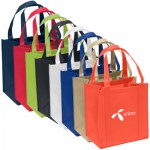
reclaimed wood recycled banner biodegradable seed paper bamboo biodegradable-packaging

Why Should Your Company Consider Eco-Friendly?

Eco-friendly marketing is a trend that’s here to stay, and your company should embrace it. Educated consumers are demanding environmental responsibility from the companies with which they do business, and marketing efforts should be no different. By using eco-friendly marketing processes and products companies can help the environment and empower their customers to become eco-friendly.

If you have any questions about how your company can practice more eco-friendly marketing, contact us!


10 multi-family media plan must-haves

Do you have a new multi-family community opening soon or an existing community that you’ve recently acquired or renovated that needs help? No matter what the situation, if your answer is “yes,” then you’ll want to make sure your community’s media plan contains these 10 ingredients for success:

1. Strategy

This includes a gradual ramp-up, starting out with Internet listing service (ILS) sources when the leasing office opens, and increasing supplemental media (non-ILS) when apartments are ready for move-ins. Also, try not to make any long-term commitments when purchasing supplemental media (non-ILS) from media sources you are trying out for the first time.

Sure, you may pay more per month per insertion, but it will save you money over the long term if you’re not locked into a contract with a source that might underperform. Finally, renting and buying housing is seasonal, and your marketing efforts should be, too.

Scale back supplemental media and try more cost-effective targeted media during holidays and the colder months, when people are more apt to be with family and friends than looking for a place to live.

2. A Budget that Makes Sense

Your advertising spend should be proportional with how many units the apartment community has to lease. You’ll also want to take a look at the market in which the community is opening, as well as average pricing in the area to determine the advertising spend on a per unit basis. For example, since New York, N.Y. is a more competitive housing marketing than say Hartford, Conn., the cost-per-unit advertising spend will be higher.

3. Internet Listing Services (ILS)

The multi-family industry’s leading national ILS are among almost every multi-family media plan’s must-haves. In each individual market in which you plan, you’ll also want to research local news and event publishers to see if they offer listing sections for housing.

Often times, the leading national ILS syndicate to these local publishers (for example, the real estate sections of SeattleTimes.com or WashingtonPost.com, etc.), which eliminates the need to list on both the national and local ILS.

4. Online Display Advertising

In each individual market, you’ll want to research the local news and event publishers and determine which make sense for online display advertising. The publishers that deliver the greatest results have housing sections to which online banner display ads can be targeted.

Network buys, such as websites across the Google and Yahoo networks, offer different levels of targeting (geotargeting, contextual targeting, behavioral targeting, retargeting, etc.) and often deliver. In addition to local publishers and network buys, consider certain national sites that allow geotargeting, such as Trulia.com or Pandora.com.

5. Email Marketing

Email marketing can start as soon as you have the beginnings of a prospect list, and it can continue throughout the campaign for anything you want to promote – open houses, specials, reduced rent, move-in incentives, etc.

Email lists targeting new prospects can also be purchased and sent out with the same messaging as the items mentioned above. Generally, though, email marketing is used to convert prospects to residents, not to acquire new prospects.

6. Pay Per Click (PPC)

PPC advertising is important to capture active housing seekers who may not be searching through traditional ILS sources. Google, Bing, Facebook and LinkedIn are big players in PPC advertising. Google and Bing PPC ads help capture prospects that are searching for housing in ads associated with organic search results.

By contrast, PPC advertising on Facebook and LinkedIn is displayed to users based on such criteria as gender, zip code, mile radius, place of employment and relationship status from data that each of these social networks already knows about its users from their profiles. In all cases, there are no wasted impressions because advertisers only pay when someone clicks on their ad.

7. Local Community Outreach

Local races, charity events, fairs or parades are great ways to get your community’s staff or salespeople face-to-face with future customers. They’re also a great way to build community involvement and boost public relations within the community.

8. Out of Home (OOH)

If your community has limited building signage opportunities, as often there are signage restrictions or no opportunity for building signage, a billboard is a great way to generate awareness.

When choosing a billboard, you’ll want to know the longitude and latitude coordinates and map them to the apartment community to see if the billboard is facing traffic that is headed toward your community, as well as if it makes sense to be used to direct prospects to the community.

Transit (subway, bus or train) advertising is typically more effective if the community is close to a stop or station or is in the middle of a city, rather than in suburban areas. However, you may find that you are trying to target suburban commuters who take the train to work in the city, in which case transit advertising in the suburbs makes sense.

Mobile billboards are also a great way to promote awareness when a traditional billboard is not available in the location you want.

9. Strong Tier 2 List

When we say “tier 2,” we’re referring to items that we’ve researched and feel could or should be used if the community needs an additional push when traffic falls. Typically, the items that would have been good choices for tier 1 if the budget and timing had allowed are items that make it to tier 2. Tier 2 is necessary because those slow traffic times do come, and it’s important to have a backup plan.

10. Only Really Relevant Print

In some markets and in some cases, it makes sense to run a print ad. If a popular local magazine has a “best places to live” section, or a popular commuter paper has a robust real estate section [most common in the New York City designated market area (DMA) and other select East Coast markets], then it might make sense to run a print ad if your community needs an extra push.

Creating media plans is one part art and another part science. Media plans are fluid and require constant care and analysis. But, if you include these 10 must-haves in your multi-family media plan then getting traffic in the door won’t be a problem – it’ll now be up to your onsite staff to convert the leads.

We love creating multi-family media plans. Let us help you with your next community’s media plan.

Four tips to avoid common pitfalls when installing wall graphics

You can apply wall graphics to a wide variety of surfaces, such as glass, metal, brick, cement block, and most commonly, drywall to activate any space. Whether your goal is to energize a fitness center, motivate employees or create a memorable customer experience, wall graphics, if executed properly, can really transform a space.

However, if you don’t plan and prepare properly, your wall graphics can bubble, peel or even slide off the wall – all of which is very costly to remove and repair, but avoidable if you take the proper measures. Follow these four tips to avoid common pitfalls when installing adhesive vinyl wall graphics:

Tip 1 – Smooth Walls to Perfection

People often have the misconception that wall graphics will cover wall imperfections, such as joint compound that hasn’t been sanded to perfection or paint drips. The material that is most typical for wall graphics is adhesive vinyl, which is only 2 millimeters in thickness.

When wall graphics are applied to surfaces that were sloppily finished, each imperfection will show. Also, the darker the graphic, the more visible the imperfection will be.

The key is to make sure that whoever is responsible for finishing the walls to which graphics will be applied takes extra care when finishing. That person should run their hands over the entire surface to make sure it is completely smooth, so the paint, when cured, will be as smooth as glass.

Tip 2 – Take Pains with Your Painting Process

The paint selection and process is by far the most important and overlooked step to a successful wall graphic installation. Think of the wall graphics as giant stickers. The stickers need as smooth of a surface as possible for maximum sticker-to-surface contact.

Always use white water-based semi-gloss paint when possible. The reason that the paint selection is white is because dark colors can sometimes transmit through lighter graphics, and we recommend semi-gloss because we want as smooth of a surface as possible for the sticker to stick to.

Never use flat paint. On a microscopic level, it creates a rigid surface that will eventually cause wall graphics to peel at the edges. However, there are instances where it is not possible to paint the wall with white water-based semi-gloss paint when using cut out wall vinyl, in which case you could paint the walls with an eggshell finish at the minimum.

After painting, and without exception, always allow at least 10 days for the paint to fully cure. Paint chemically changes and emits gas up until it has fully dried. Thus, covering a wall with an unbreathable layer of vinyl wall graphics prior to this happening will cause bubbles on the graphic from the paint off-gassing.

Tip 3 – Installation Conditions Matter

Often wall graphics are part of a larger construction project. If you’ve ever been on a construction site in the winter, then you know that they are not always conditioned until the project has been completed.

This occasionally poses a problem for interior and exterior wall graphic installations, as the temperature needs to be consistently 55 degrees Fahrenheit or higher so the adhesive will work effectively.

Conversely, when installing wall graphics in warm climates or the summer time, always note the position of A/C ducts. If you are installing a graphic in the summer time and A/C units are running at full capacity, make sure the vents are not located in a position where they are blowing on the wall graphic. If they are, then consider turning the A/C off or to a warmer temperature until a few days after the wall graphics have been successfully installed, allowing the adhesive enough time to bond with the painted surface at a warmer temperature.

Tip 4 – Always Hire Professionals.

If you’ve ever been involved with wall graphic installations, then you know that good installers are hard to come by, and they can make the difference between amazing wall graphics that transform a space to graphics that look sloppy and detracts from the space.

If you are shopping around for a good installation company, make sure you ask for references and samples of installations that the vendors have completed before hiring anyone. Or consult with your design firm.

Since we do this type of work all of the time, we have established a network of installation companies throughout the U.S. upon which we count on to get the job done right.

Don’t rely on someone onsite to conduct a survey or provide measurements. Sure, these initial measurements can get the designers started on concepts and proofing by providing measurements and photographs of the space if you are working remotely. But before printing and installing the graphics, always employ the installers that are doing the work to visit the site to conduct a site survey.

Site surveys usually cost a few hundred dollars and can range beyond that, depending on the complexity of the space being measured. Consider the additional expense an insurance policy for the success of the final product.

If you follow these four tips, you will greatly increase the probability of successful wall graphic installations. Of course, there are always extenuating circumstances that come up, so always be sure to consult a professional .